
1st Life
Because they had not seen each other in so long, Mar wondered why she had received the beautiful invitation to the picnic, just after weeks spent gathering sea lavender and reeds for her latest perfume collection. She hadn’t seen anyone at all in months, lost as she was in the dunes of Delta del Ebre. All she could think of was to rest, have an iced tea—or more—sit beneath the orange trees and, finally, talk.
The orchard was already waiting for her, unwound and prepared with the loveliest picnic spread. Bruna, her old friend from college, was pouring a sun-touched iced tea and staring far into the sea. She looked just as she remembered her twenty years ago, but there was something uneasy about the way she spoke as Mar took the first sip:
“Refreshing, isn’t it?” she said, with a strange look while pointing at the light blood-colored iced tea.
Mar nodded, still surprised at how off that simple question sounded. Was it the fact that the last time they were together, she, for once, did not follow Bruna’s advice? How could she? She had told her to give up her dream; she didn’t think she could make it, and yet there she was, gifting her the very same fragrance that Bruna had once described as a mix of seasickness and wood rot. But it wasn’t; it was the scent of their home. Why did she find that scent so unsettling when everyone else in town found comfort in it?
Gustily, the wind changed and so did the conversation.
Bruna began to talk about the cookbook she had been writing, about the wonderful recipes in it. But above all, she spoke of the drinks that paired each dish which were airy and tasty and so perfect to have on picnics.
Everything was so idyllic, so untroubled; everything but the iced tea. Bitter, bitter it was. It reminded her of something she couldn’t quite place… a long-gone memory. Chills. Sirens. Terror. The finality of a needle saving her from the inevitable crash.
What was that she had just drank? It tasted of fear… She grabbed her drink again, but her hands could barely hold it; they were swollen and numb. She looked closer at the remnants of her tea and saw the beautiful red of a grapefruit slice. It was such a world-shattering sight.
She was mortally allergic to grapefruits, and Bruna knew it.
She turned to her friend, to her murderess, in time to catch her smile. Convulsions. Vertigo. Collapse.
“Breath,” she said as she was falling to the ground. She took in the world one last time. She didn’t want to let the air out, in case Time would end. But it didn’t, and then… it did. “Dusk was dawn was day.”
2nd life
Is there passing of Time after we die? Is the light still flickering on a burning summer’s day, just as it would, indifferent, unfeeling to our absence? Do the fields that we once roamed grow untamed when our step vanishes, or do they remember, still, our pace that grazes them like a ghost that cannot, will not, depart them?
Mar was dead, and yet she wasn’t. She was no longer under the orange trees that saw her take her last breath; she was no longer holding the glass of grapefruit iced tea that asphyxiated her…
Around her now, shadows and sun. Clay curtains billowing in the wind. Witches’ herbs upside down, drying in the heat. Lily of the valley like a tower by her side. Limes and lemons scattered around the stone pine table where she found herself waking up.
She tried to get up, but couldn’t. She tried to reach out, but her arms didn’t respond. She screamed, but her voice was silence. Her skin felt slick and leathery, dimpled and grainy, but as cutting as fine sandpaper. So gutting was the realization that it was not her skin that she was feeling, but the skin of the fruit that killed her. She was trapped inside a grapefruit, in the very kitchen of the friend who murdered her.
Oh fate… so cruel and so relentless… For all of them! For all the fruits in the table had suffered the same tragic end.
As days passed, Mar heard the tales of their murders in front of the highest tribunal: the lily of the valley, Ostara of torments, dawns and brumes; right before they were about to be squeezed into delicious lemonades.
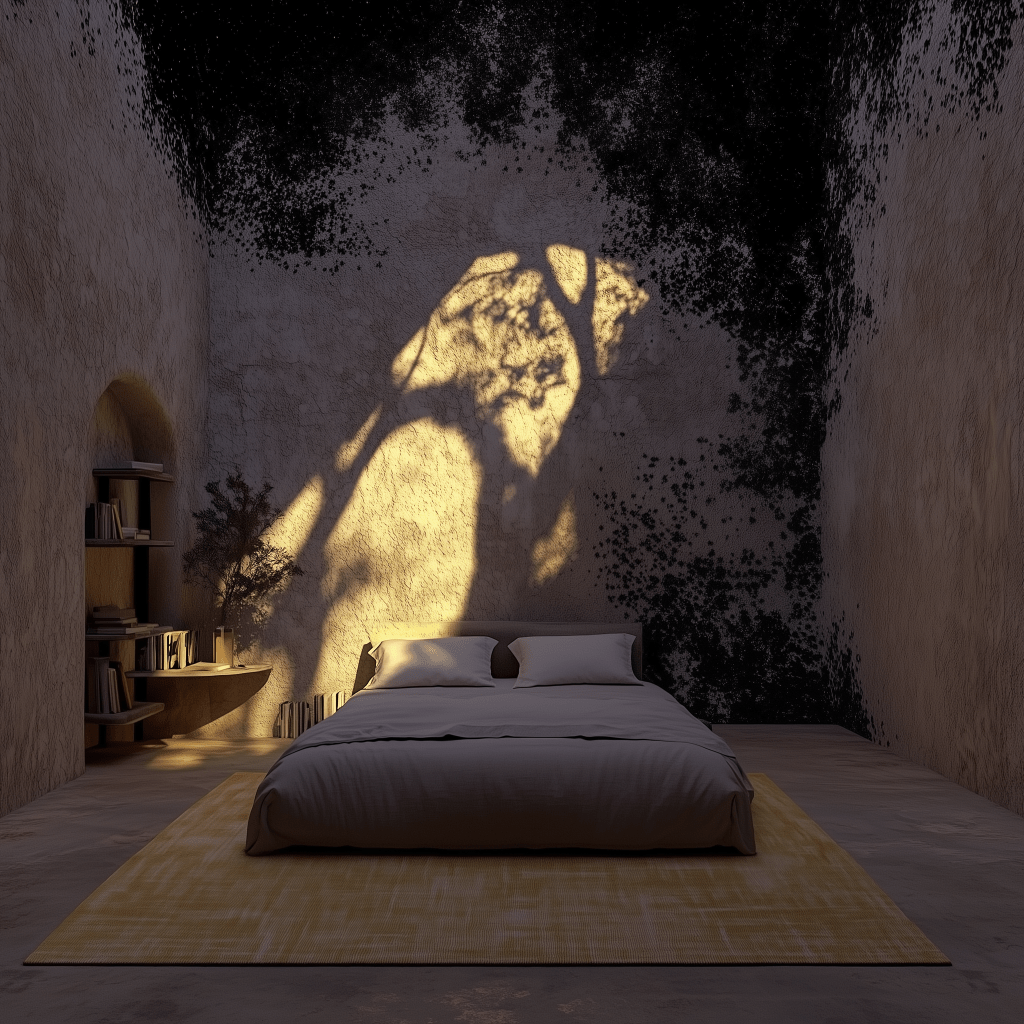
One, died the slow death of black mold growing in her lungs.
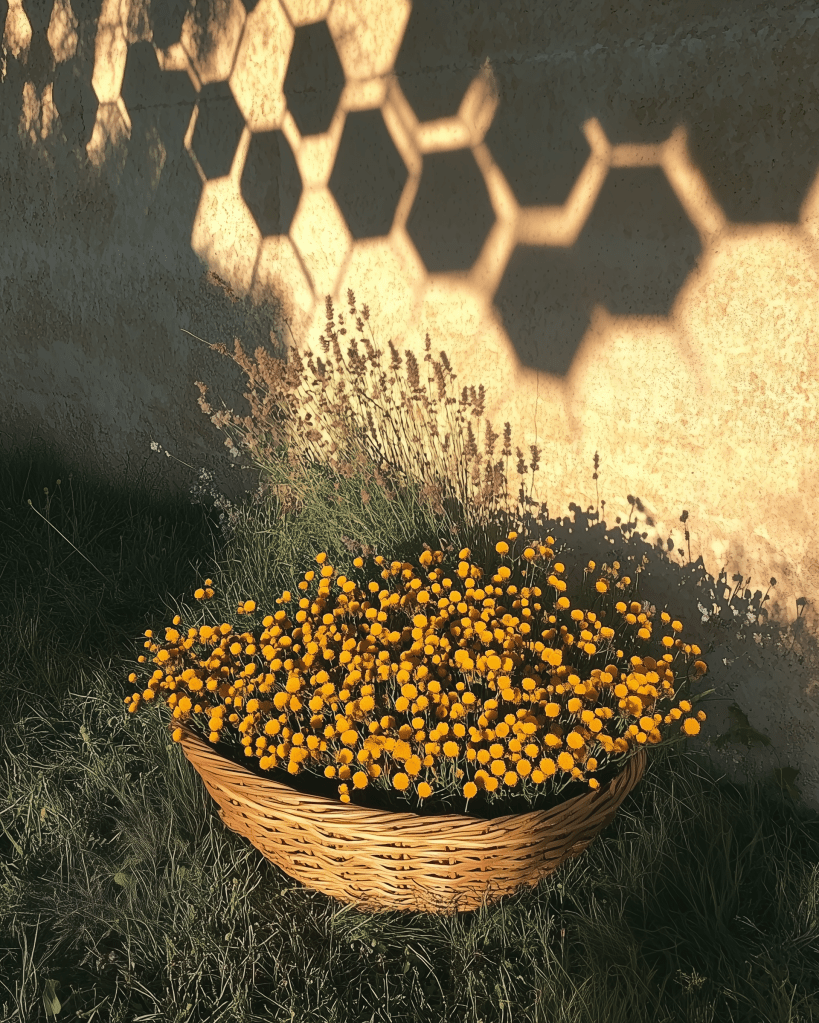
One could not breathe after having bee-n stung.
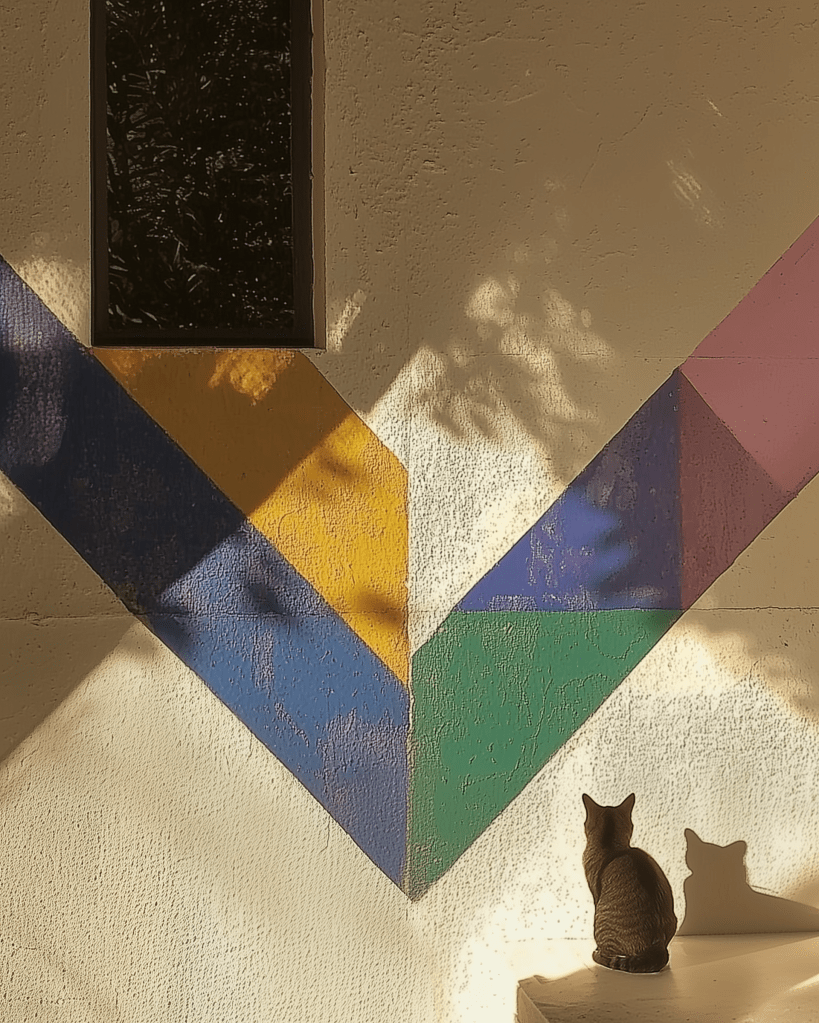
One suffocated by inhaling cat fur a whole night.
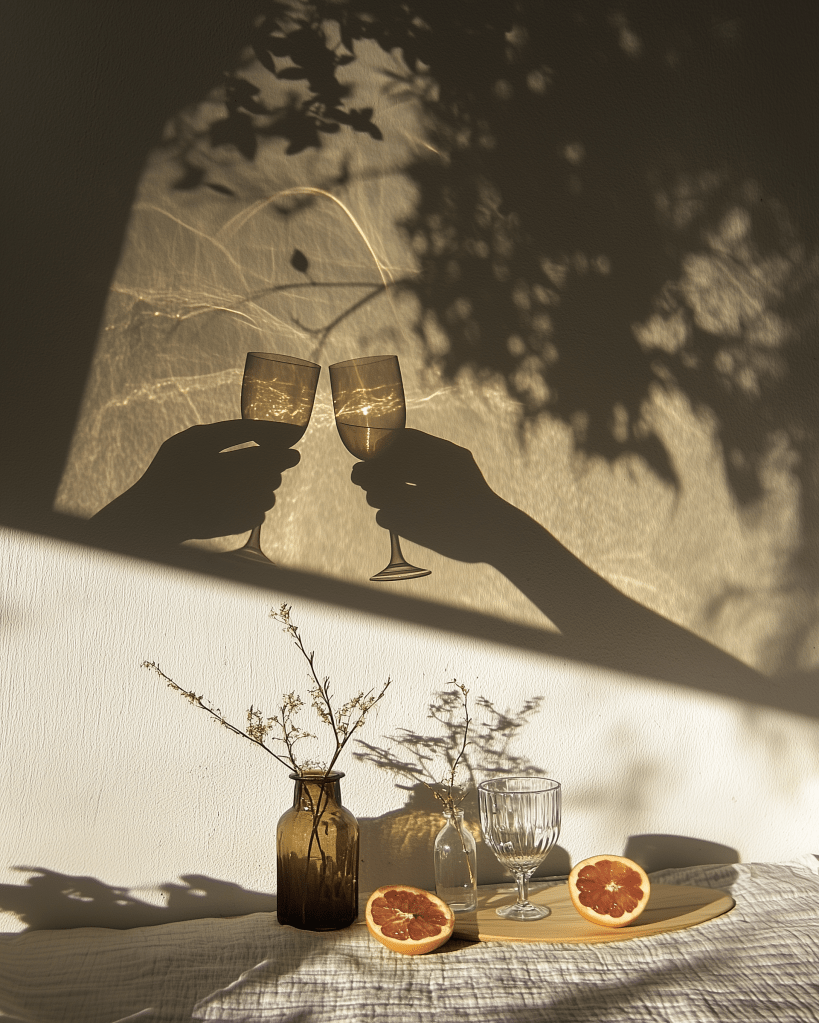
And, the last—Mar herself—took the drink from her ex-friend’s hands.
Bruna had killed all of them in different ways but with the same goal: to rob them from their airs. She couldn’t stand their success, their fortune. She who had been side-lined, overlooked; she the queen of the spotlight, the one everyone believed was going to make it. Instead, she was outshined by the brilliance of strangers, strangers that she had carefully picked while doing a survey on allergies, promoting natural antihistamine products.
The first murder took the longest. She was learning the craft, carefully redirecting the night irrigation system towards the exterior wall of the victim’s bedroom. Over the years, the lungs of the victim filled with mold and, ultimately, collapsed: an undetectable and brilliant plan.
The other murders were quicker but just as undetectable. All allergies, all dying of asphyxia. What she couldn’t achieve in her career as a chef, she achieved as a murderess: self-realization.
At the table where all Bruna’s victims spawned, there was always the big jar of lily of the valley flowers, a large barrel of blood-orange wine macerating, and two beautiful books. One was the cookbook that Bruna had been working on back and forth, and the other was a little booklet, a diary of shadows, where she kept a meticulous account of her kills.
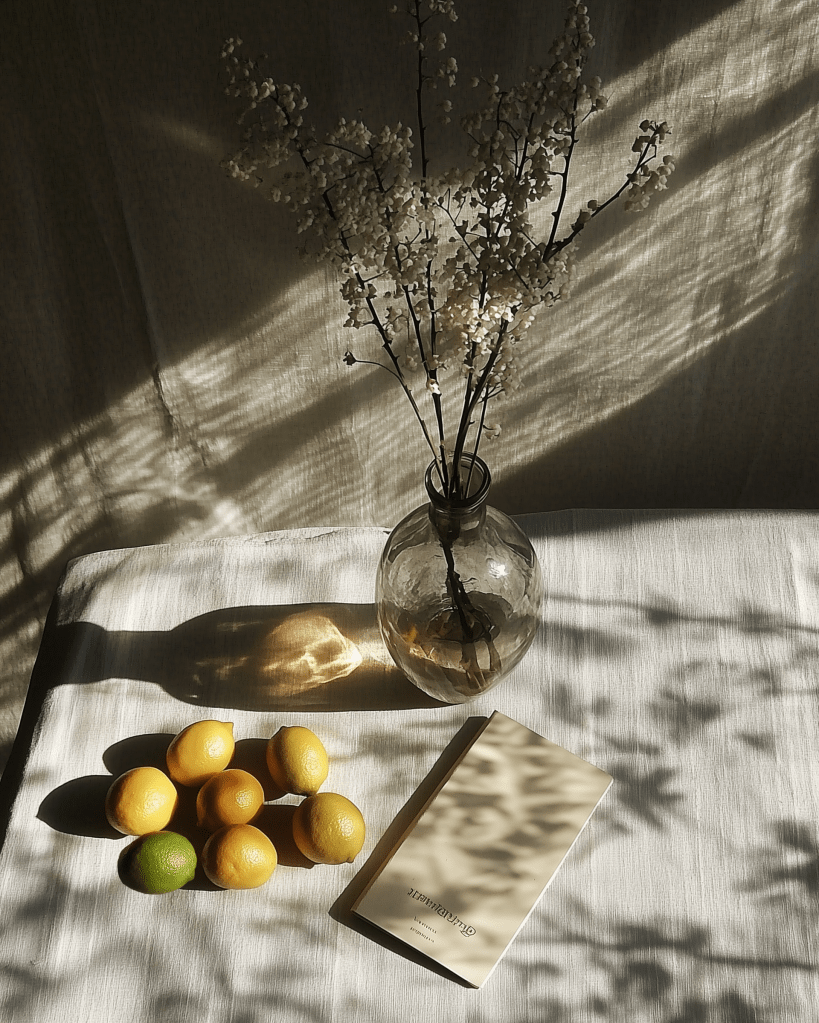
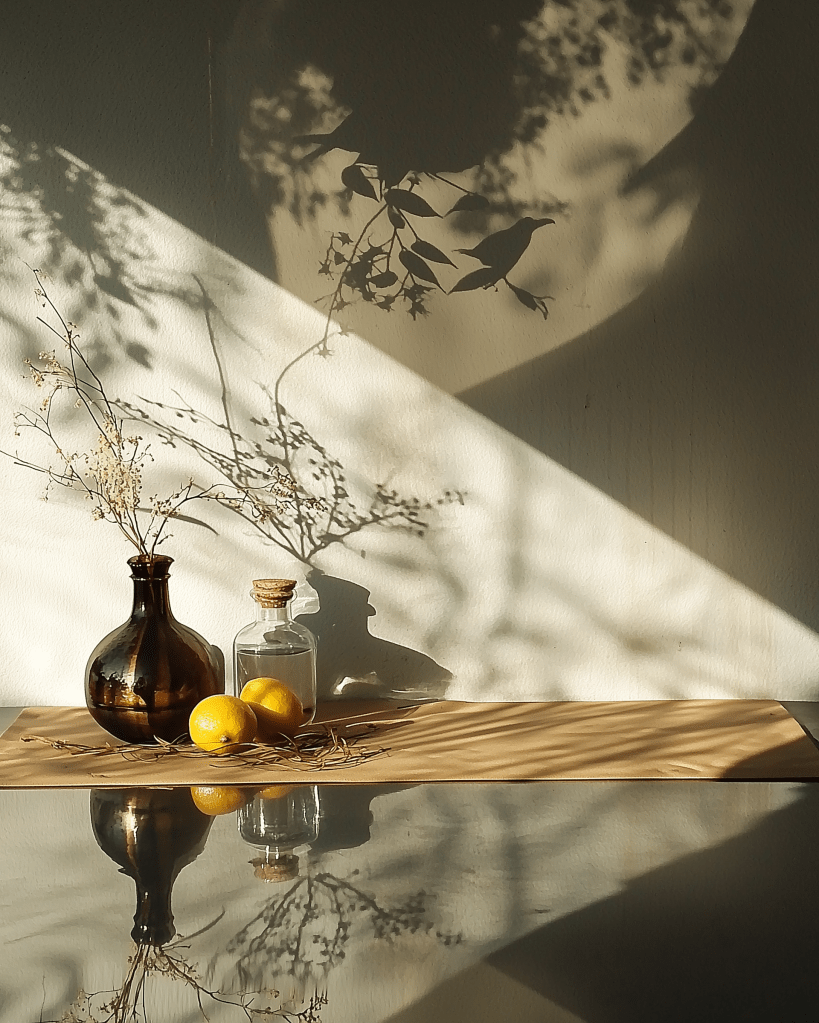
That table was now their whole world, a place of chiaroscural illusions. Reflections spilled half-truths on the walls, forming, shaping, almost like a stage where all of them could rise above.
One by one they flew, but not Mar. Never Mar. She was so bitter, so bitterly betrayed.
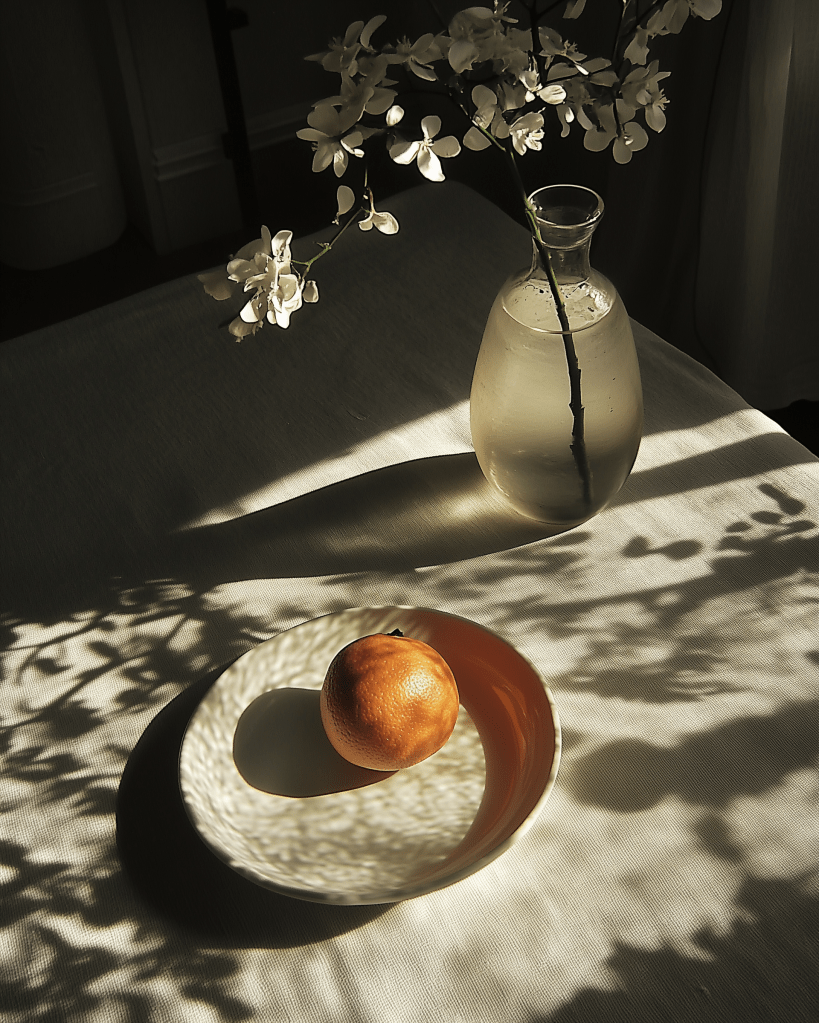
Put to the side, and yet beautiful in her grief, watching them all take flight: their spirits drizzling like rain, pirouetting like seeds on the breeze, rising like waves, soaring like waders beyond that haunting shadowplay. A million shades clinging to light were such a moving sight…
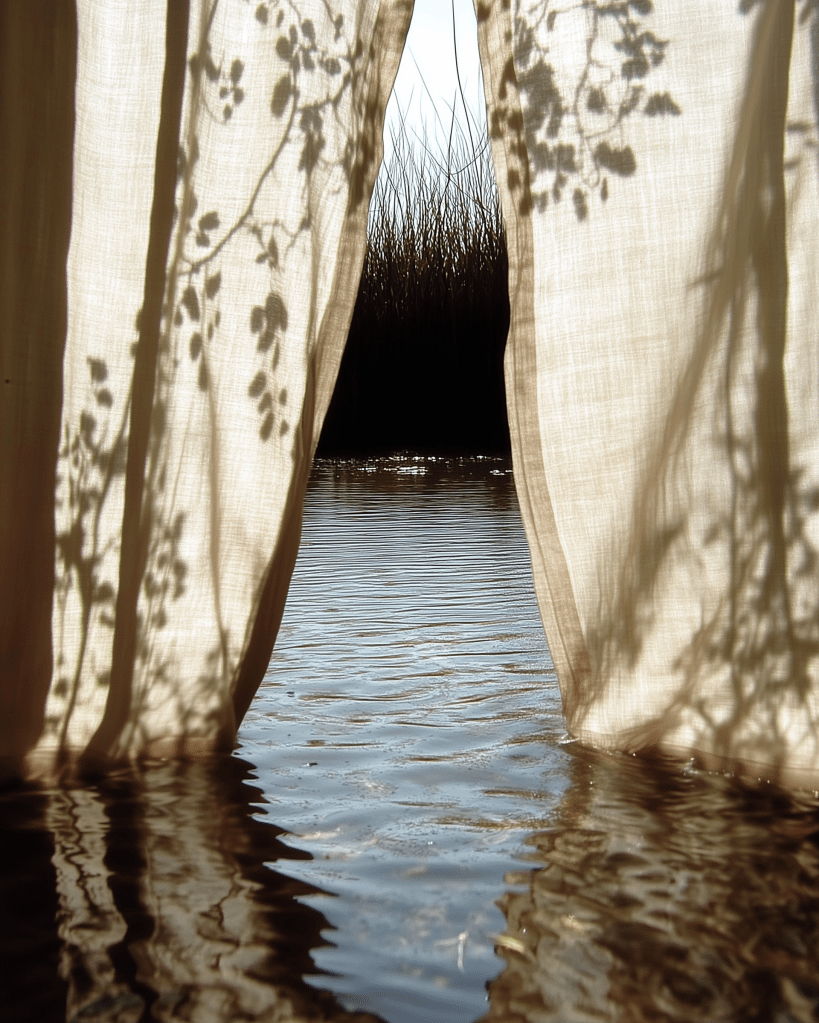
For months, Mar watched the light change over the great Ebre River, especially on windy days, when the curtains would be blown nearly out of the kitchen, the hems almost fraying the water, its stillness undone by the currents.
The scent of that river was unlike any other: it smelled of salt and moors, and of the blood-orange brew that had been infusing slowly as the seasons passed. It reminded her of the fragrances she used to compose. Layered. Complex. Sweet. But bare, somehow. Sensing it as a grapefruit was so difficult; wishing, as she was, all the time, to become just as sweet, just as light, as that raspberry-flavoured orange liqueur.
One winter evening, Mar observed Bruna stirring orange blossom honey into water for a special recipe she’d been working on. As the syrup seethed in the beautiful copper pot, Bruna sat down to write in her cookbook flanked by the citruses she was about to use.
In elegant handwriting, she wrote: “A BLOODY SANGRIA TO DIE FOR.”
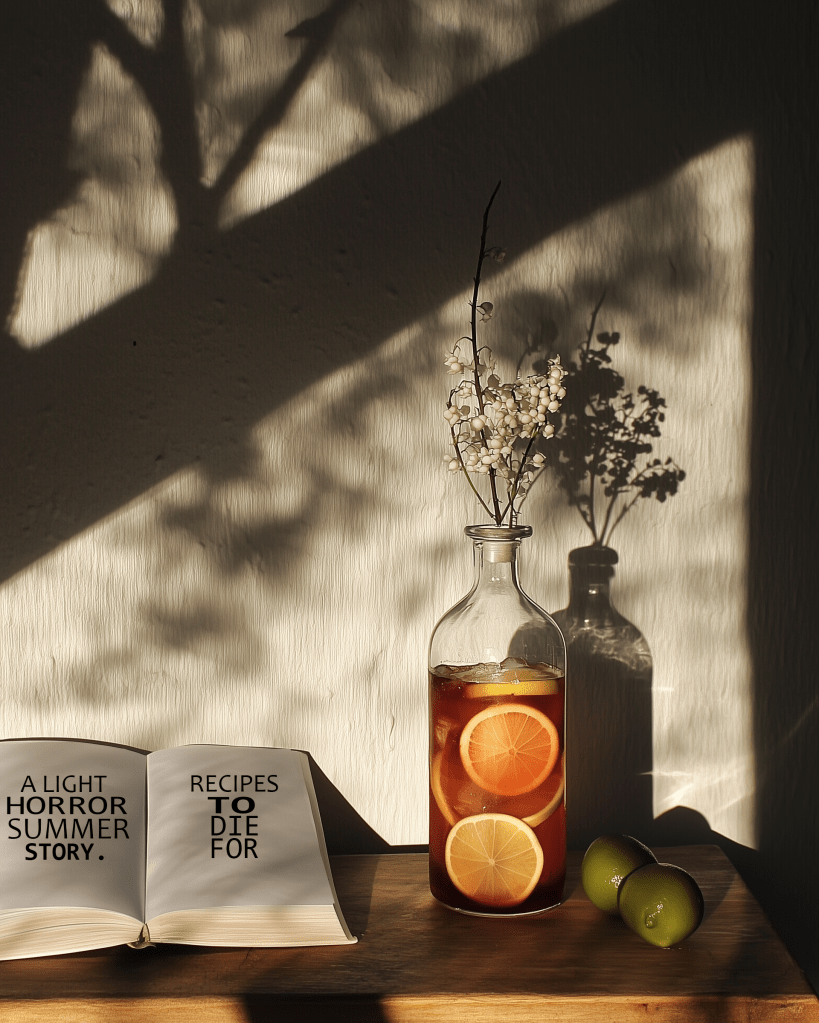
She began to list all the ingredients she would need. With horror, she realized that would be all the fruits on the table—she herself being one of them. To die, again. How does a grapefruit experience death? Is it in the moment it falls from the tree? In the moment it begins to decay? Or is it when it is finally devoured? Mar, who had already known a human death, was about to find out.
That same night, Bruna lined up all the fruits and began chopping. First went the limes, with their zest, then the lemons and their slices; and soon Mar was to follow. She stayed there, paralyzed, terrified at seeing all her companions fall one after another into the cocktail jug. Just before she was about to be slashed, Bruna filled a punch spoon generously with blood-orange liqueur and poured it into the glass jug. The firewater branched and merged with the red wine, striking with colour the beverage so vividly that all the jug now had the most remarkable deep mulberry hue.
At last, Mar’s turn arrived. Bruna took her into her hands for the first time since she arrived at the house and proceeded to cut her into slices. With every cut, Mar felt thinner and thinner. Her flesh severed, her skin grated, her pith tossed away… She was methodically stripped, dissected to the core.
SPLASH. Down she went into the bloody sangria.
The lily of the valley who had seen it all, remained calm, knowing that her time had come just as it did for the rest. She waited until Bruna went to bed and, not long after, she began to droop. Hushed was the kitchen without her flock, their stories drowned, gone. Dark was the rain in their wake, dark was the tide and the moors. And brief was the stance of wings which do not fall but that cloud their way, from mourning, from daunt.
Over the Ebre, the rain teemed down, aware and irrevocable. Night and the watchtower strayed; the tall grass whipped, the salt cedar knelt. The curtain turned to stone—refused to move, impossibly still. So burdened by their absence that not even the storm could make it flutter.
Inside the house, only dust was left behind. The particles suspended mid-air, where the citrus had once flown, began to settle; falling slowly on the lily, causing her delicate bells to drop steadily inside the sangria jug. Unseen, a fine layer of poisonous tepals sank to the bottom of the glass carafe; waiting, quietly, for the sunrise to arrive.
As always, Bruna rose from bed with the first morning light and rushed to the kitchen to check on the sangria. She couldn’t wait to try it. It wasn’t the usual sangria, that’s for sure. It had the most fragrant star ingredient: the blood orange liqueur, and fresh fruits and herbs from her garden. The perfect drink to finish her book with. And after that… who knows? Take it to food festivals, world-renowned markets and even send samples in perfectly packaged glass jars to the most influential food critics in the land.
She poured herself a glass and drank it slowly, savouring the light that follows a great storm. And like every day, she sat at the table for a light read of her book of shadows. She loved to go over every detail of the murders: the selection of her victims, how she would trigger their allergies, the timing until they, finally, stopped breathing.
The sangria was jewel-bright, then darkened into something deeper, almost secretive. A taste that was somewhat hollow, numb. Her palate couldn’t quite recognize it; it was treacherously sweet, with an acrid, biting edge beneath. Her mouth began to dry, her pulse rose. She panicked. In front of her, the vase of lily of the valley was empty. All the flowers, gone.
Nausea crept in a haze; it tasted of rice fields in winter: murky, fallow… dry. In that dryness, there was something else piercing its way toward her cardiovascular system. It felt as if a horde of mosquitoes were swarming her from the inside out, zigzagging between her arteries; infesting her with vein-splitting larvae. They spread like a flood, still mud-bound and stagnant.
Pain. Retching. She doubled over and vomited what felt like a whole swamp. And in her belly… a valley.
“Breathe now,” she heard a voice say as she was fighting for air.
She knew, knew absolutely, that she would never again murder, that a lifespan of brilliance and deception had come to an end. In a way, it was as if all her victims brought her to that moment, for all of them had wound up in the last sangria she would ever make: a bloody sangria without a drop of blood. And how sweet the slow pace of revenge was.
Ever After
The glossy ibises of electric feathers, maroon as berry jam and sugar-coated with metallic cyans, greens, yellows and even pinks, glided through a vivid blue which was all the bluer because of winter.
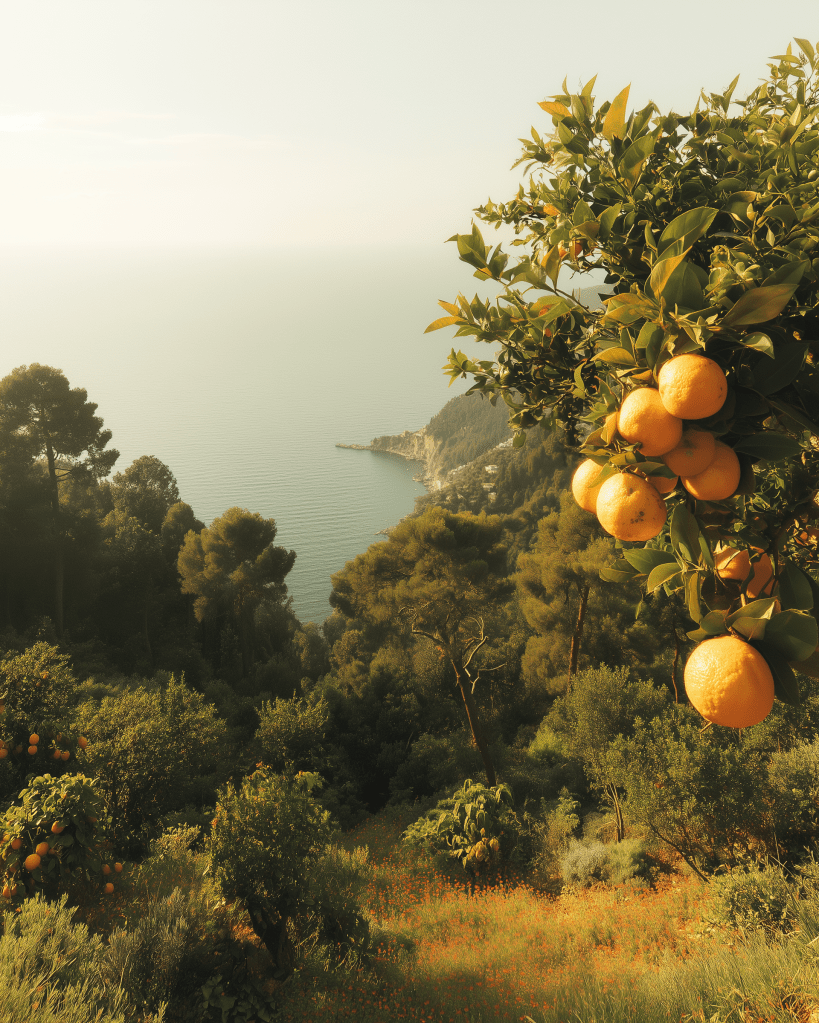
They turned at once when a wave rushed over the first row of a wild orchard. The breakwater trees, rooting almost in the sea, shielded a gentle slope whose gradient was too soft for the fits of Mediterranean storms. The slope eased upward, kindly smoothing the path for the broken souls who found their way there, drifting and tumbling down, searching for a new life. Mar and her companions among them.
Here or there (it did not really matter), citrus trees overwhelmed the air, their boughs laden with lemons, limes, and… blood oranges—but without a single grapefruit. Something had happened the moment she fell into the jug, a kind of transformation: as she plunged deep into the sangria with the rest, her bitterness dissolved, soaked in blood-orange sweetness, and became what she was now—a blood-orange spirit in the wide, uncluttered horizon of dune, river, and bay.
And if it spoke, it would say: look at the silence. Look at the silence of the sanctuary of weary roots, fretting over bits and pieces of limestone. Drink from the winter blue, and drink the wave too. They who want nothing but to die no more. Death after death. Light after light. We wrung out our sorrows, hanging on the sun.
 Oneironaut stories
Brillant story, i love it ! and the images complement the story well. well done miss !
LikeLike
Thank you so much Fabri!!!!!!! It took me a while to write it but it was worth the wait. It was so fun when I first told you about it in that boulangerie in France, sitting on the sun. And here it is!
LikeLike