
This world we live in is still home to all sorts of millennia-old life forms. Some go unnoticed, buried in the depths of the ocean. While others, like the yew trees, challenge the passing of time and rise in the most complex of ways to tell us—if only we could understand them—the life-changing events that shaped our planet.

To this date, some of the oldest yews might be thousands of years old. Although nobody knows for certain since they have a unique ability to pause their growth for centuries, waiting for the right conditions to start again. During those years of hibernation, the trees stop creating new rings; making it almost impossible to determine their true age. We know, thanks to fossil remains, that their ancestors were probably a predominant part of the Triassic era, some two hundred million years ago.
Nowadays, though, there are barely any yew forests left. Instead, a few individuals stand in graveyards and ancient church grounds, leftovers of past civilizations. But it was not always that way.

Four thousand years ago, give or take a few centuries, in the very North of what is now the Scottish Highlands, a great forest of yews covered an entire valley. The woods were already ancient when the settlers first discovered them and, from the beginning, their presence invoked a rare kind of reverence reserved only for those things sacred and almost unworldly. In the Ice Age, when glaciers receded and forests were born, it is estimated that almost all the forests in Europe were formed by yews such as these.

The valley was immensely dark due to the intricate build of the groves. The gigantic branches of the yews barely allowed any sunlight through, so nothing grew under the trees, not even moss. From an eagle point of view, the forest appeared like an impossible maze, like hair tangled so tightly it could never be combed out again. However, from below, the woods were solid trenches, barring the entrance of anyone but birds. It was a unique desert of trees, seemingly still except for the flow of the river that crossed it from side to side.
Unlike the deserted woods, the river was full of life. All kinds of plants thrived under its currents: dwarf lilies in autumn coats danced hand in hand with the bright greenery of the Java mosses. The long, silky leaves of the water ferns waved on and on at the wild salmon leaping against the current in vast numbers. The yews, as if to shelter the river, bent their branches in a way that formed a curling tunnel from shore to shore.
Such a captivating sight built the foundations of the first settlement on the highest slopes of the valley. The villagers were superstitious folk who did not dare cross the borders of the woodland, but observed it cautiously from afar. As time passed by, they noticed that the contrast of the landscape smoothed at night, especially during full moons, when it transformed into an entirely different forest. The thick branches of the yews opened up and made space for the light of the moon to enter fully into the valley, bathing it in silver shines.
On nights like those, strange events took place. People felt an alluring force pulling them down to the forest. Their cattle felt it as well and some animals left, never to be seen again.
Soon enough, fear took over caution, and the tribe came to a decision that would change the course of the river forever. They dammed the river flow to create a lake as large as the entire valley, flooding the ancient forest completely and making it disappear underwater as if it had never been there. Not only were the yews sacrificed, but also all the life forms that depended on the balance of that singular ecosystem. The salmon were caged into the mortal trap of still water and, with them, many other creatures perished as well. The old forest had become a graveyard underwater.
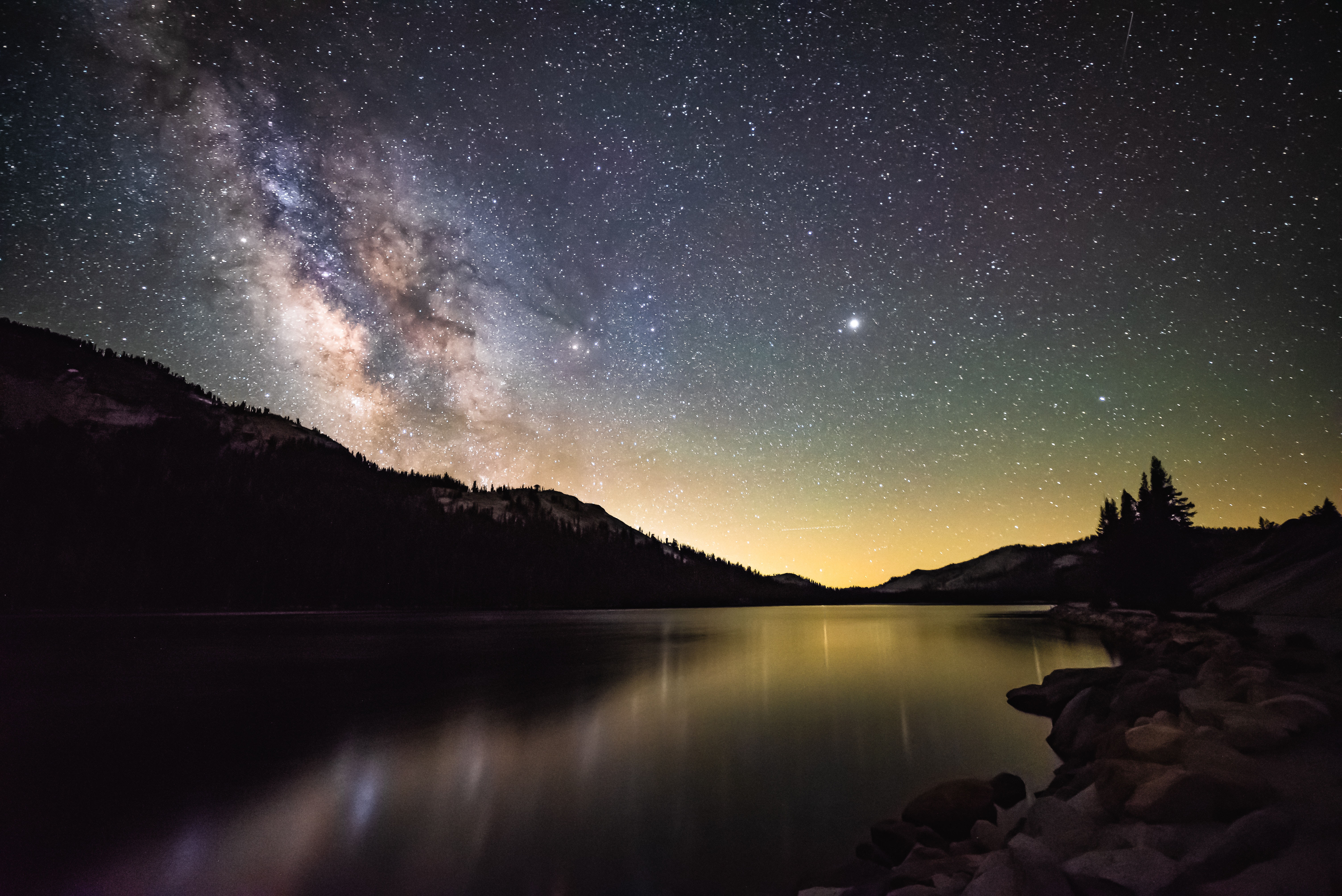
As far as the villagers were concerned, the lake was a keen addition to their crops which were rapidly growing all around the shores. The land was particularly rich by the riverside and the first harvest did not take long to arrive, filling the village with aromas of every kind. Little did they know that the nutrients feeding their grain came from the decomposing remains of the forest itself. Curiously, around the time of the first harvest, a strange sickness spread through the settlement. They called it “moon-rot,” because the skin of the sick began rotting with each full moon. Within a year, most had died and the few survivors were unrecognizable, practically inhuman.
A new rule was then enforced that banned any use of the land around the lake, which was named right there: The moon-lake forest.
Seasons came and went many a time; the landscape and the generations rose and fell, but the lake remained the same. The first druids arrived and, with them, rituals of worship for the natural world. They observed both sun and moon cycles, and the dark valley became a powerful magnet for old magic. They called the submerged yews the guardians of the underworld and the keepers of the afterlife.

On every full moon, they made offerings to the flooded forest so it would spare them from the pull of the water. At first, they only brought cattle. A few goats here and there. But the magnetic moon was still calling them every month. Then the horses were brought in, the dogs and the most esteemed of their animals. But none of it appeased the appetite of the moon-lake forest. And soon, the human water-burials began in the lake.

For those ancient civilizations, the yews symbolized rebirth and reincarnation. They hoped their loved ones would transform beneath the water into something lasting, like the trees themselves, whose branches can grow down into the soil and become roots again for another tree, making it hard to distinguish one tree from another. They are both individuals and one with each other. Even if a dead branch should fall to the soil, there is a chance that a new tree could emerge from that death.

25-card oracle deck, based on Ogham divination.
(via dreamsarelikewater)ption
In their final hours, the dying were given the only part of the tree that is not poisonous: the red berries.
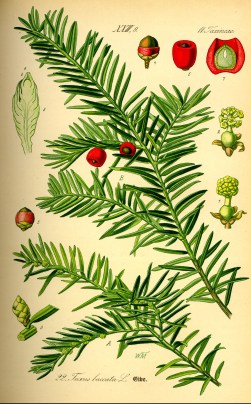
A brew was made from their juice, sending them on a journey of dreams to the worlds beyond; a prophetic transition to prepare them for what lay ahead.
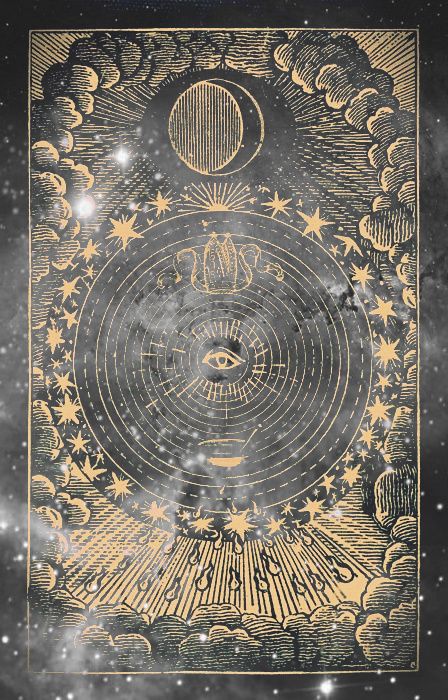
Following these beliefs, for centuries the dead were brought to the shores on full-moon nights, and a calling was made to the beings underwater to take the deceased to the underworld with them. If the corpses sank into the dark waters, it was said the forest accepted the offering and the dead were welcomed into the afterlife of the trees. But if the bodies floated up, it meant the forest had rejected their spirits, trapping them between worlds, forced to wander the shores and guard the forest from any further harm.
Bizarre events also occurred during total lunar eclipses. When the celestial force of the moon was at its peak and the satellite turned bloody, the entire lake seemed to come alive. Not much could be seen through the darkness of the water but an unnatural play of fluorescent lights shone from the depths and unknown scents filled the air. Salmons jumped, once more, against the moon tide. Huge waves rose from the surface, forming what looked like trees in motion; growing and melting in droplets of water. These events were so rare that they became legends, soon to be forgotten by modern civilizations.
Somehow, the dark valley remained untouched by wars and progress. At first, this was due to the mysticism surrounding it. Later, it became a natural reserve called: Solas na gealaich, the light of the moon. And it was a popular sightseeing spot for both locals and tourists alike. Since the pre-Roman civilisations passed down knowledge mainly orally, no written accounts of those strange events were ever recorded. Only some stories survived, told mostly to frighten children into obedience on full-moon nights when they too felt the pull of the moon. And so, every year, more than one unprepared visitor vanished at night without a trace in the surrounding areas of the lake, which gained the reputation of having some of the strongest underwater currents in the world.
Many moons passed since the first men discovered the original forest, and the old river outside the dam was slowly dying out when, in mid-October of 1891, one of the biggest storms ever recorded broke right above Solas na gealaich. Lightning struck so relentlessly that the valley was lit as if by day. The blasting winds lashed out at the rocking waters, sprouting waves that were miles high. The ancient dam could simply not take it and so it broke, unleashing tons upon tons of water back into the hollow river, which swallowed it all up in one, long sip: the first drink in millennia.
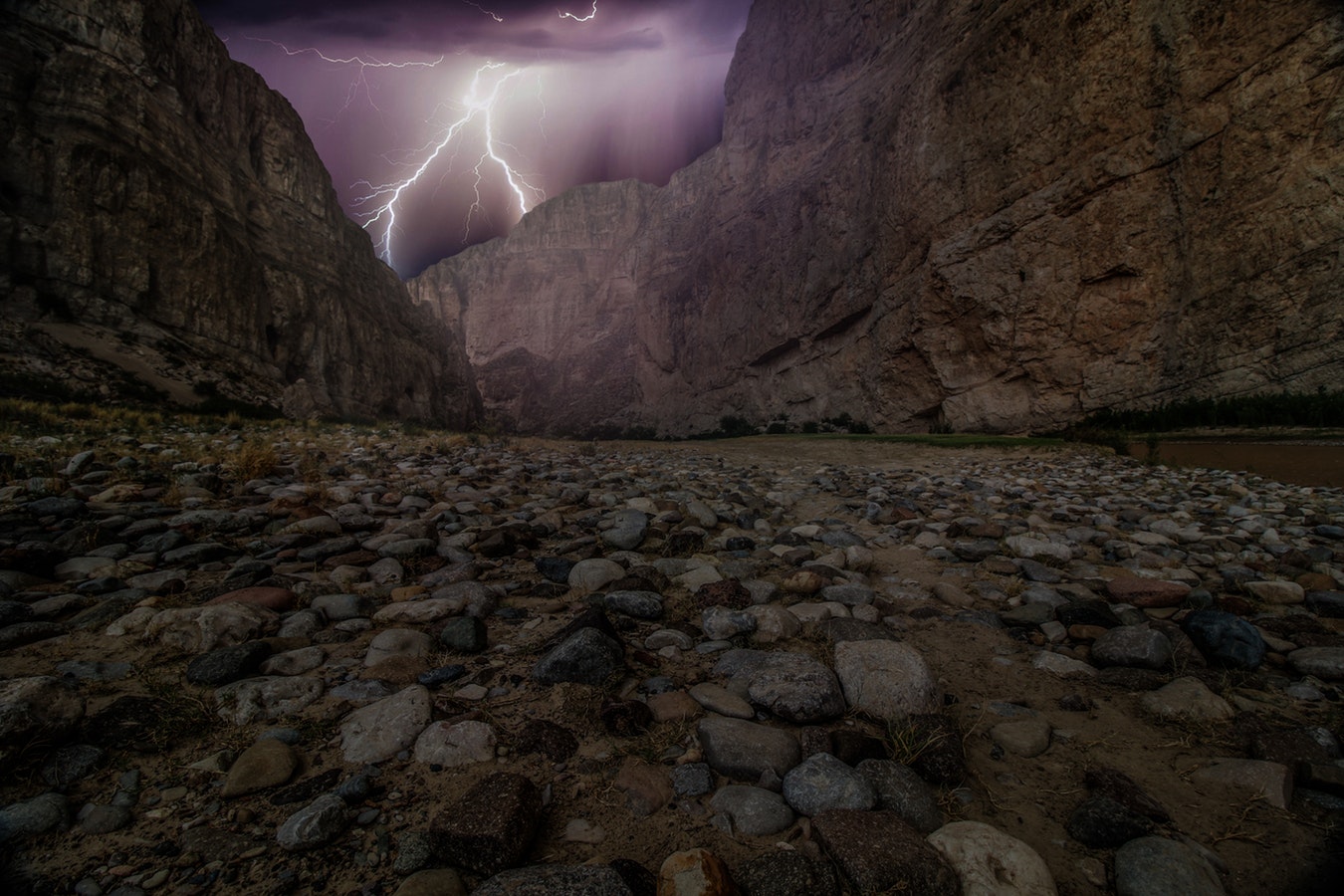
The storm raged on and off for about a month before it suddenly dissipated, leaving behind an unprecedented scene of devastation. It was not the devastation provoked by a storm, but by mankind. Millions of trees were uncovered from the bottom of the valley — some rooted out entirely, most reduced to mushy logs. The skeletons of the pioneers of the old world were nothing but broken trunks standing in a barren desert of stumps. Not a drop of water was left inland.
Needless to say, after the moon-lake forest revealed the tragedy of its story so openly, visitors became almost extinct in a fortnight, which is why nobody witnessed the total lunar eclipse of November 1891 in Solas na gealaich.

On that date, after the sun retired behind the hills of the valley, the lowlands awoke to the calling of the red full moon, and the yews were among the first to answer. Branches began to spring from the broken trunks, which simultaneously grew taller and taller until an entire canopy was formed. It was as if they had been growing for thousands of years in a single night, their shapes shifting in unceasing motion.
Invisible currents undulated the scene, as it happens underwater. In this manner, the branches swirled into the air and released their leaves to the skies. In turn, the leaves unbound their swollen berries, which emanated red lights, making them an easy catch for the many salmon swimming around the forest.
But not even the salmon looked as they should. Their skin glowed in luminous colors that changed as fast as the background around them: bright green like the beds of moss carpeting the entire valley, electric purple like the water lilies suspended in the air.
All kinds of night-blooming plants flowered in unison under the attentive care of their gardeners. All those sunken souls that the lake had once accepted had been enrolled in the ultimate task of preserving an impossible ecosystem, where water, land, air, and even underground organisms coexisted and interacted with each other on every full moon.

Snow-white goats climbed the trees as if there were no gravity at all. Ancient tribes of the undead, formed after centuries of water-burials, tended carefully to the fields of moonflowers. The old dogs, freed from their masters, playfully sniffed the mix of aromas coming from every type of flower.
The valley was brewing the kind of potion that captivated so many souls year after year. The Night Phlox plants exhaled vanilla aromas with hints of almond and honey. Delicious cocoa fragrances radiated from the so-called chocolate daisies. Spicy citrus scents intoxicated the night butterflies, who played their part in helping pollinate the moonflowers.
All those creatures, some as old as the valley, needed the shine of the moon to exist.
Hundreds of millions of years ago, the ultraviolet light that reached Earth was so powerful that it could burn the living tissue of organisms until it destroyed them. Over time, a few primitive life forms might have learned to submerge themselves at the bottom of the oceans during the day and, at night, emerge closer to the surface to pollinate with the softness of the moonshine. Perhaps the moon-lake forest, as one ecosystem, had mastered the art of the moonlight. And on special occasions, such as total lunar eclipses, the pull of the moon was so strong that it could revive and transform an entire forest, even if just for one night.
Nobody ever saw the glory days of the valley, and now it rests in the sun. But once in a while, under a full moon, it will still be calling for us.
 Oneironaut stories
Very poetic story. I really liked the combination of scientific facts and supernatural stories. The whole thing blends together very well. Can’t wait for the next article !
LikeLike
Thank you!!! I wanted to make a story around night-blooming flowers and go back to the time when the ozone layer was still not fully formed and plants and animals used the light of the moon instead of the one of the sun.
LikeLike